


Anthropic's Claude Code Leak
Last week, Anthropic accidentally exposed internal Claude Code source through a packaging mistake, and that may lead to one of the most instructive AI product lessons of the year. Anthropic itself admitted this was a human error. Everyone can now discuss what this leak revealed, and there are at least a few important things to learn from it.
1. In AI, speed of shipping can become a liability if release discipline does not keep up.
Anthropic removed the affected version quickly, but the code had already spread. Once something like this is public, it is effectively impossible to contain. This was not the first time Anthropic leaked Claude Code source, which makes the incident even more striking.
2. What leaked was not just implementation detail; it was product thinking.
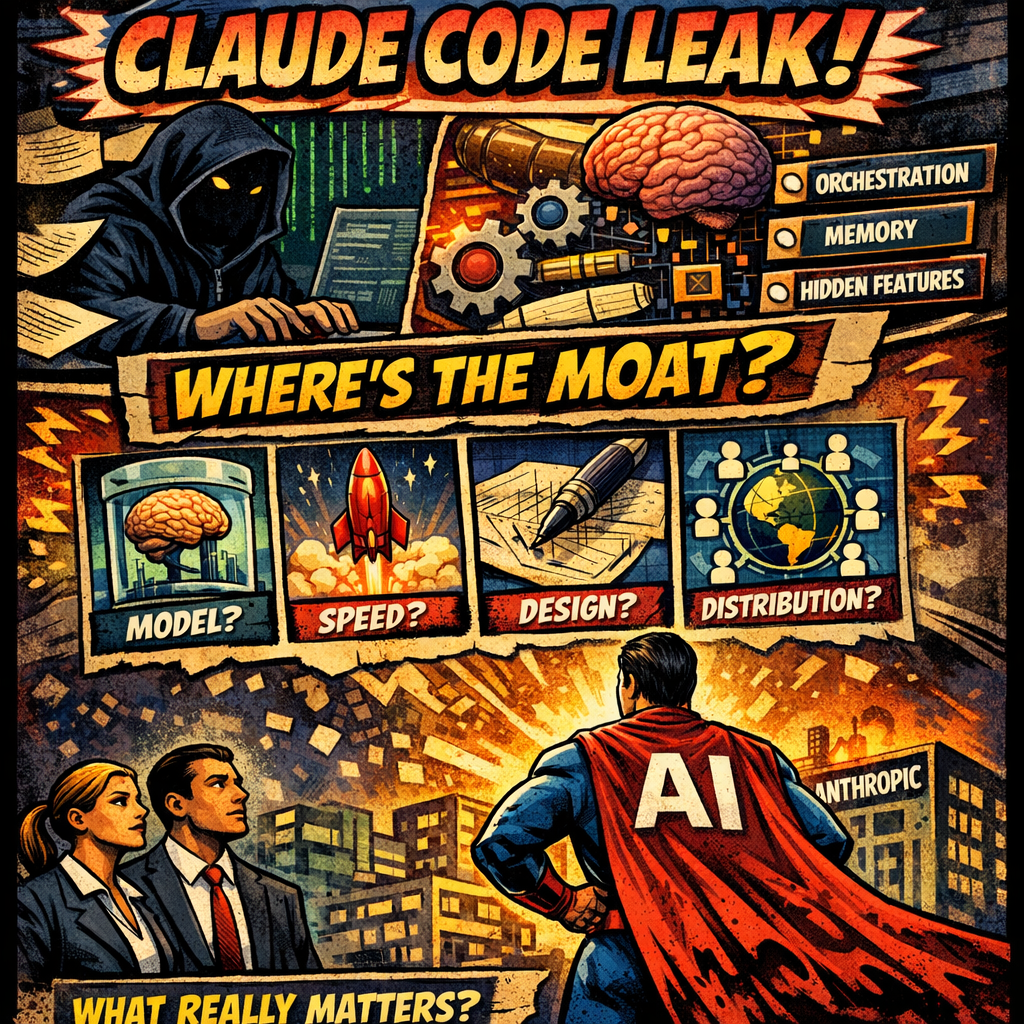
Public analyses suggest the exposed code revealed not only orchestration, memory, and context management patterns, but also references to hidden or unreleased features such as Buddy, Kairos, Dream, Ultraplan, and Undercover mode. That is far more valuable than a simple code dump. It gives competitors and researchers a window into how one of the best AI coding products is actually built.
3. This leak reinforces a point that many people still underestimate: the model is only part of the product.
The most important differentiation in LLM-based tools often comes from the harness around the model: orchestration, memory, context compression, tool use, permissioning, safety controls, and workflow design. The analysis of the Claude Code architecture strongly points in that direction. The real competitive advantage is often not the model alone, but the engineering system built around it. Claude Code source code is huge (500K lines of code over more than 2000 files).
Over the next weeks, we will probably see competitors absorb some of these ideas, close some feature gaps, and reproduce parts of the experience faster than they otherwise would have. Good for users. Less good for Anthropic.
And that leads to the uncomfortable question:
If the product can be studied, copied, and iterated on quickly, where does the moat of an AI product actually come from?
- The underlying model?
- Execution speed?
- Product design?
- Distribution?
Even if a company like Anthropic is able to keep reinventing the harness faster than others can copy it, we will eventually converge and reach a level of maturity from which marginal improvements will become less significant.
One more thing makes this especially interesting: Anthropic has positioned itself as one of the most careful and safety-conscious players in AI. So when a preventable packaging mistake exposes strategic product IP, it does not just raise engineering questions. It raises credibility questions.
The AI race is not about who has the best model anymore. It is about who can build, ship, protect, and continuously improve the best system around that model.
I am curious about what you think: Does this kind of leak materially weaken Anthropic’s moat? And of the four pillars above — model, execution speed, product design, distribution — which one do you think matters most right now?
