


What remains once AI overtakes most of the execution? Taste.
Taste is not whether one uses short rather than long sentences, or whether one dares to use the infamous em-dash with style.
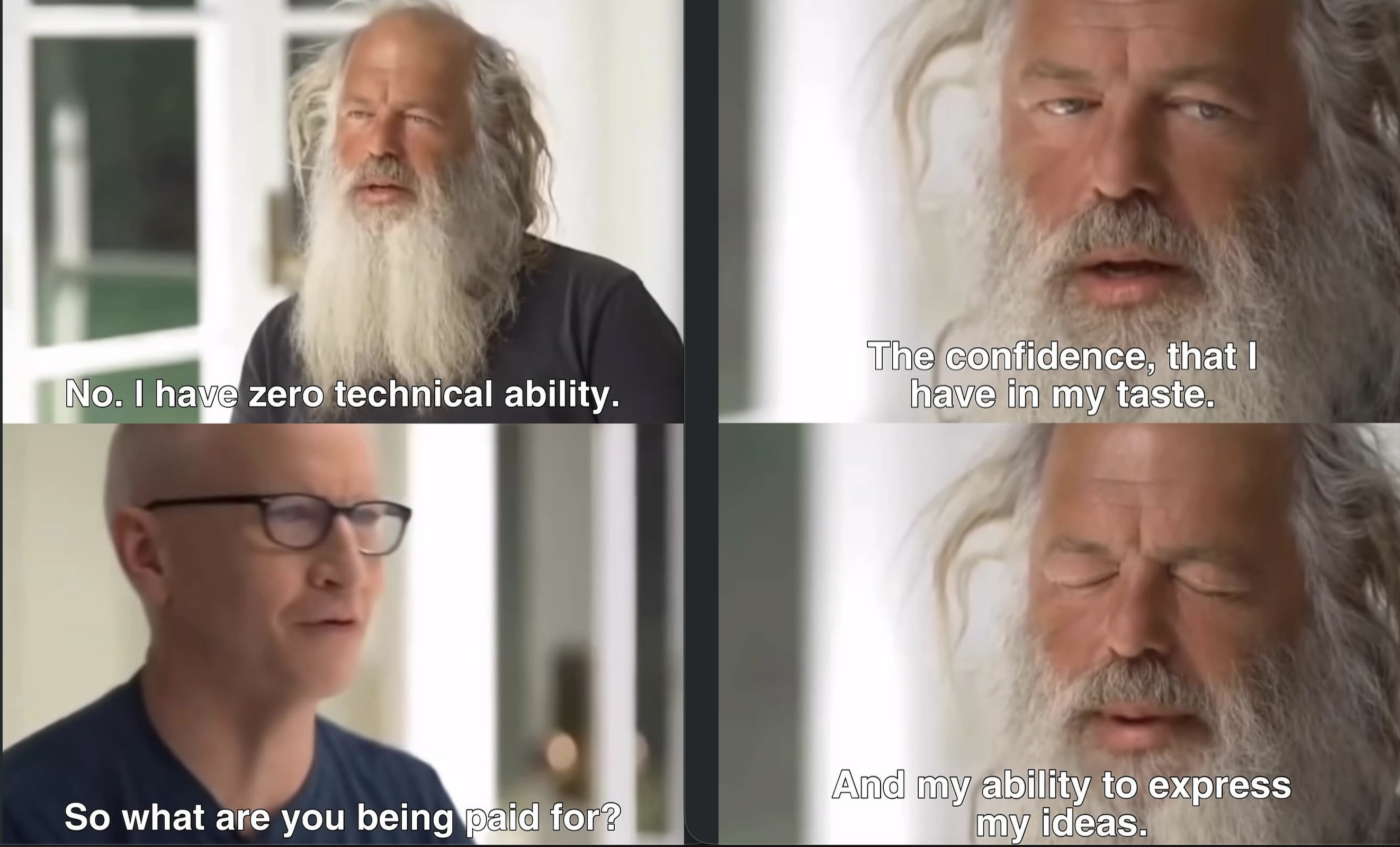
Taste is using one’s best judgement to determine whether the execution is right: whether it fits the intention and original purpose. You can generate a thousand lines of code in minutes now. But deciding which of those lines belong in your product, and which do not — that is taste.
Interestingly, taste is also about setting the intention. Answering questions such as:
- What is worth building?
- What is worth writing about?
- What is worth standing for?
Taste is unique to a particular person and develops over time. Still, taste tends to follow a consensus among a community of connaisseurs. There are wines most people agree are outstanding, yet they do not pair well with all kinds of food. There are general rules in writing (text, software) that most people consider acceptable, yet they do not fit all purposes.
In the future, we will not be looking for people with specific skills, e.g., the ability to write code, but rather for people with a taste for something specific, or the willingness to acquire such taste.
What is interesting about taste is that there is something very general about it: the process of forming an opinion, weighing the pros and cons of alternatives. And at the same time, something very specific: your taste in poetry will not help you much in software engineering.
I think that this Meme with Rick Rubin (which is going somewhat viral in the coder community) caries a deep misconception: While taste is indeed distinct from technical ability, practice (which in turn leads to some level of technical ability) is required to acquire taste.
Rank in your head the top five disciplines in which you have acquired the most taste. I bet at least one of them is not work-related, and I bet it ranks high.
Would you like to share that one with me? I’ll go first. Or, just let me know what you think about taste.
